QPS Staff Spotlight: Angela Raines-Caldwell
Angela Raines-Caldwell Leads as New Community School Coordinator at QHS
By: Katie Rodemich ’02
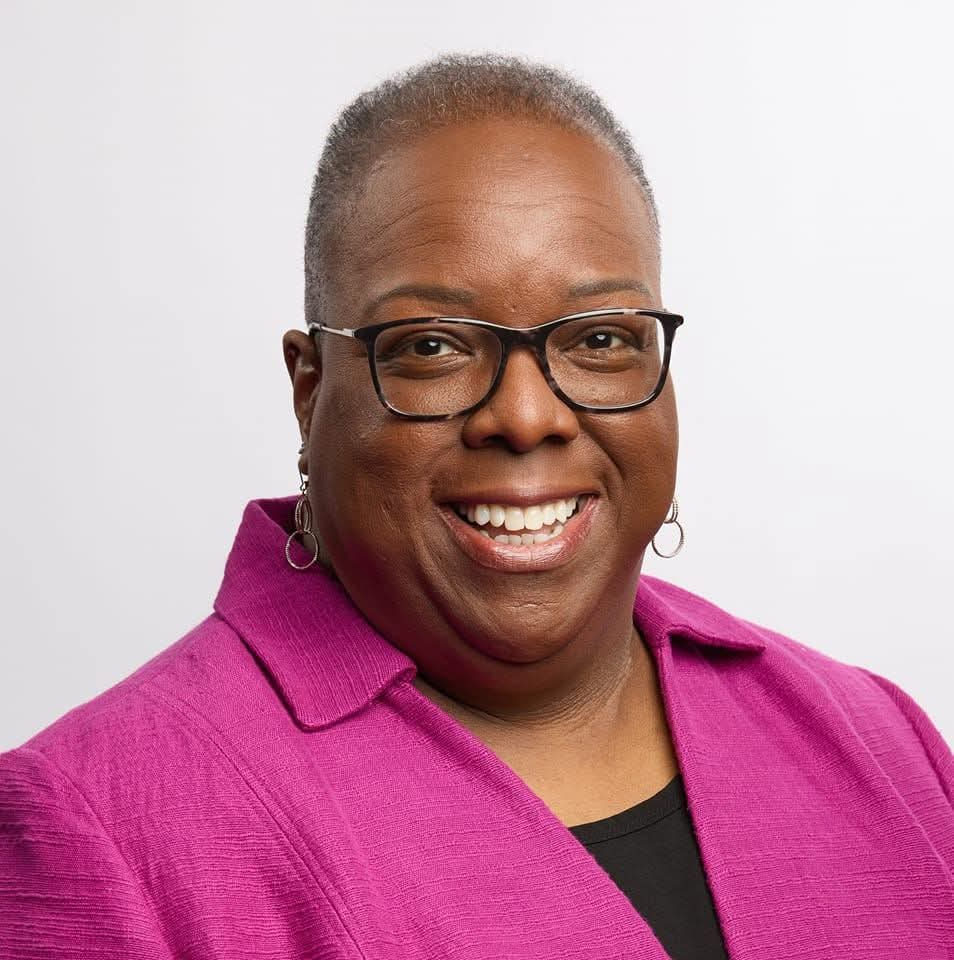
As Quincy Senior High School’s first-ever Community School Coordinator, Angela Raines-Caldwell brings not just bold vision but a lifetime of lived experience to the role. She knows the power of community—and what happens when it’s missing. Growing up on Chicago’s South Side, she attended schools that weren’t just places to learn—they were centers of support, connection, and opportunity. That experience shaped her deeply held belief: when schools and communities work together, students thrive.
Angela also understands the challenges teachers face. Her mother was a lifelong educator, and Caldwell watched her pour time, energy, and personal resources into her work—often with little recognition. It’s one reason Angela chose a different path, building a career in economic development and workforce readiness, where she forged strong ties with businesses and organizations across the region.
Now, she’s blending those life lessons into a single mission: to create a culture where every child is seen, supported, and set up to succeed. She’s wasting no time laying the groundwork for a lasting cultural shift—one that reaches beyond school walls.
“This role is really to bring together community, parents, teachers, administrators, students—all of those—for the success of the student,” Caldwell says. “So many times we hear people say, ‘Well, if the parents would do this,’ or ‘if the teachers would do that,’ and everybody’s passing the buck. But if all of us would work together, we’d see greater success. We’d see a higher graduation rate. We’d see less truancy. We’d see fewer behavioral issues.”
The Community School Coordinator is exactly what it sounds like: a connector. The role is designed to link students, families, educators, and local partners in a shared effort to remove barriers to learning. Funded through a federal Full-Service Community Schools grant, it’s part of a five-year initiative to reimagine what a school can be—not just a place for academics, but a hub for opportunity, wellness, and wraparound support. At QHS, that means everything from expanded after-school programming and parent engagement efforts to linking families with resources for food, housing, mental health, and more. The role is grounded in four core pillars: integrated student supports, expanded learning time, active family engagement, and collaborative leadership.
Angela’s job is part strategist, part advocate, part relationship-builder—and all heart.
Caldwell’s path to QPS began after years working in economic development, most recently as Director of Workforce Development at GREDF (Great River Economic Development Foundation). When that role ended, friends encouraged her to apply for this newly created position.
“I got to know a lot of the organizations and individuals within the community. When I left there, I went to Bella Ease for a short time, but because of grant money, that role ended,” she says. “Then friends told me about this new QPS position. They said, ‘Some aspects of it are like what you did at GREDF.’ I thought, why not? When I read the job description, I knew—I had to apply.”
Though the program officially launches in the fall, Caldwell is already building her initial team of parents, educators, students, and community members—each with a seat at the table.
“The best way to find out what each group thinks is to have a representative from each one sitting together having an honest discussion,” she says. “Not a conversation that’s meant to impress, but one that’s real—because that’s what our students need.”
A major focus of the community school model is addressing the barriers students face outside the classroom—barriers that too often keep them from succeeding inside it.
“We have to remember Maslow’s hierarchy of needs,” Caldwell says. “If a student doesn’t have food security, clothing, or a safe place to sleep—how can we expect them to focus on math or science or English? We have to take care of the basic needs first so they can actually learn.”
She points out that Quincy has the resources—social services, nonprofits, community support—but people don’t always know what’s available. Part of her role is to build those connections.
“We’re not about handouts,” she adds. “We’re helping people get to the position where they can be self-sufficient and self-supporting.”
One of the first initiatives Caldwell is helping to implement is a life skills curriculum—something she says schools have moved away from for too long.
“Our kids need to know how to balance a bank account, iron a shirt, separate laundry, read an electric bill,” she says. “They need to know what renter’s insurance is. Or if they get a mortgage—what that actually means. These are the basics of adult life.”
The course, developed in partnership with the University of Illinois Extension, will include simulated budgets, career paths, and real-world decision making over several weeks. It’s an interactive way to teach financial literacy and practical life planning.
“It’s great to want to live your purpose,” Caldwell says. “But your desires need to match your income.”
As she puts it:
“You can’t desire red-bottom shoes on a teacher’s salary.”
She speaks from experience. Growing up, she watched her mother pour her heart into teaching—spending long hours, giving extra care to her students, and often reaching into her own pocket to cover classroom needs. And despite all of that, Caldwell saw the paycheck that didn’t come close to reflecting her mother’s dedication.
“I watched my mom give everything to that job—her time, her energy, her own money—because she cared so much about her students,” Caldwell says.
Caldwell is also passionate about creating clear, practical pathways that help students move from high school into meaningful careers—especially in high-demand fields like health care, manufacturing, public safety, and skilled trades.
“I’d love to see a direct pipeline from QHS to John Wood Community College to the fire department, EMS, and police department,” she says. “And we already have the setup—with amazing classes at QAVTC, from welding to diesel mechanics to nursing. Let’s tap into that.”
She believes exposure to career options should start young—long before high school.
“Can you imagine if a third grader had the chance to explore chemistry or read about a career that excites them? If we introduce students to these things early, they’ll be more prepared—and less likely to change their major three times in college.”
For now, Caldwell’s focus is on QHS, but she has plans to expand the community school model to Quincy’s junior high and elementary levels. She sees the first five years as critical—and she’s determined that this will not be a fleeting initiative.
“This is not going anywhere. You can either get with the program or stay out of the way,” she says firmly. “This is for our kids, and they deserve the best.”
Caldwell is quick to remind others what’s at stake—not just for students, but for families, educators, and the community as a whole.
“We need to support students. Support teachers. Support each other,” she says. “If someone has an idea, bring it. But if you’re only offering criticism and no solution—then hush.”
For Caldwell, it’s deeply personal.
“I just became a grandma. My granddaughter didn’t ask to come into this world—it’s our responsibility to make sure she has everything she needs to thrive,” she says. “And that’s true for every child. I want my grandbaby—and every grandbaby—to grow up in a community that works together to build them up.”
Her mission isn’t about checking boxes. It’s about creating a culture where every child is seen, valued, and equipped to succeed. She knows lasting change takes time, but with persistence, partnership, and a shared commitment, Caldwell believes Quincy can build a future where every student has the opportunity—and the support—they need to thrive.
“At the end of the day, this is about our kids,” she says. “If we can come together—parents, teachers, community members—there’s no limit to what we can accomplish.”
Because as Caldwell knows: it really does take all of us.